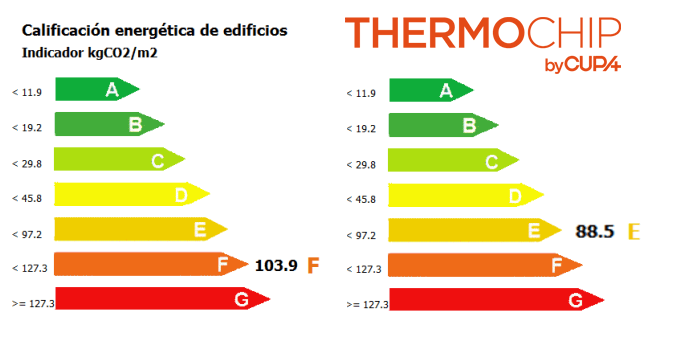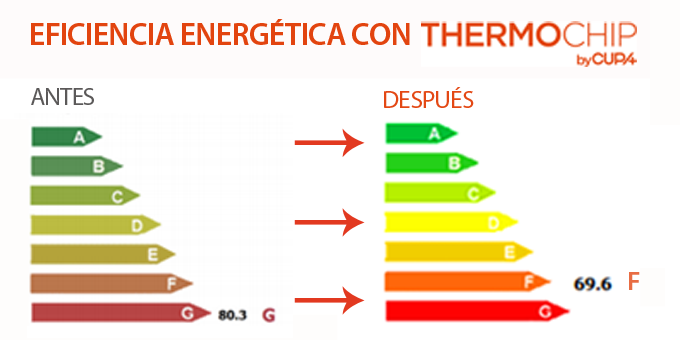
THERMOCHIP® DECOachieves a saving of 23% in heating demand by internally lining theroof and facadeof a rehabilitated home. This improvement ofenergy efficiency guarantees compliance with the new requirements of the Technical Building Code (CTE) in relation to its level of insulation by moving from energy classification G – the least efficient – to F – the most efficient -, and reducing COâ‚‚ emissions into the atmosphere by 13.4% (from 80.3kgCOâ‚‚/m² to 69.6kgCOâ‚‚/m²).
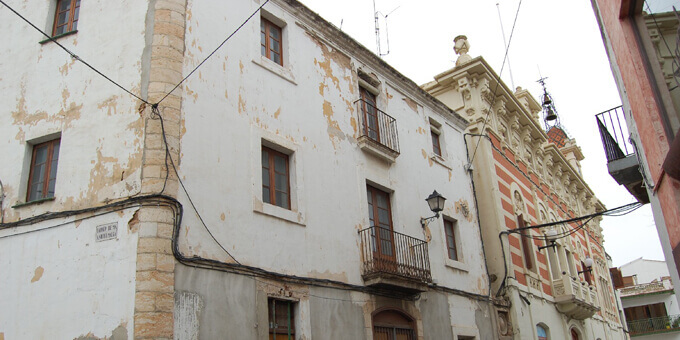
Therehabilitationis the best way to achieveenergy efficiencyestablished in the building regulations. THERMOCHIP® has carried out a study to determine the necessary thermal insulation in a two-story house, measuring 110 square metres, built in 1975 and located in Climatic Zone C (which in Spain is equivalent to places like A Coruña, Badajoz or Barcelona). This building uses diesel heating and electric DHW (Domestic Hot Water), obtaining an energy classification G – the least efficient -.
ENERGY EFFICIENCY, SAVINGS AND DECORATION
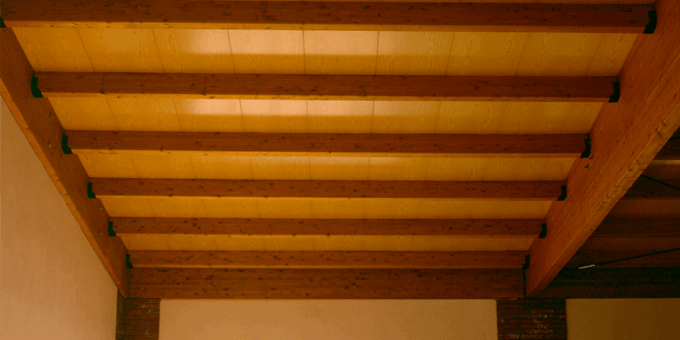
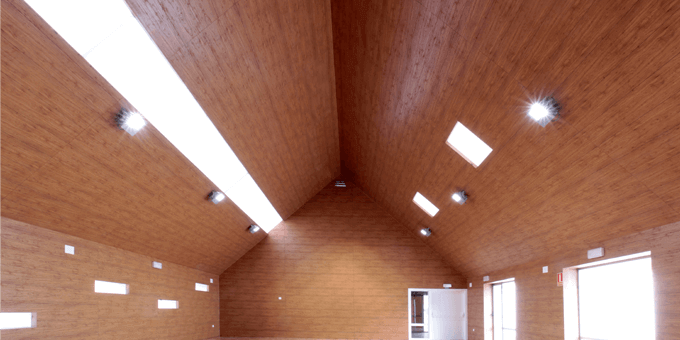
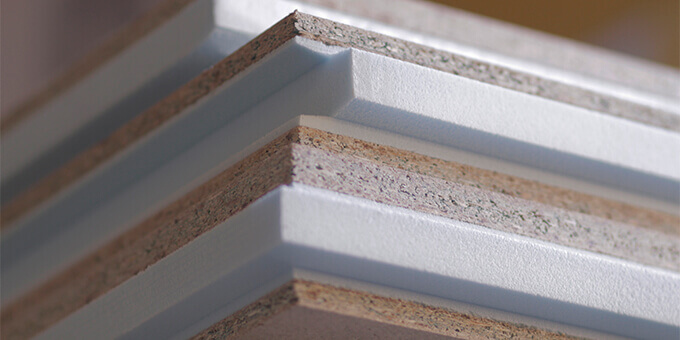
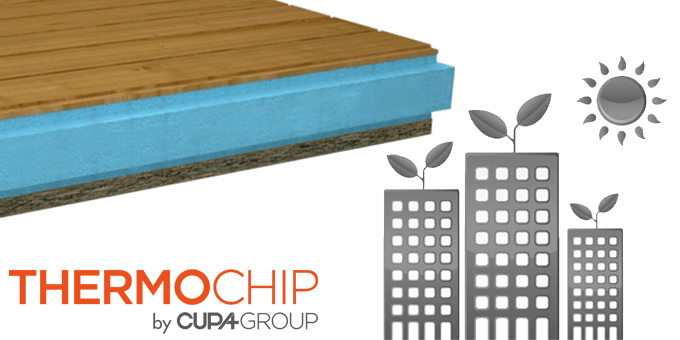
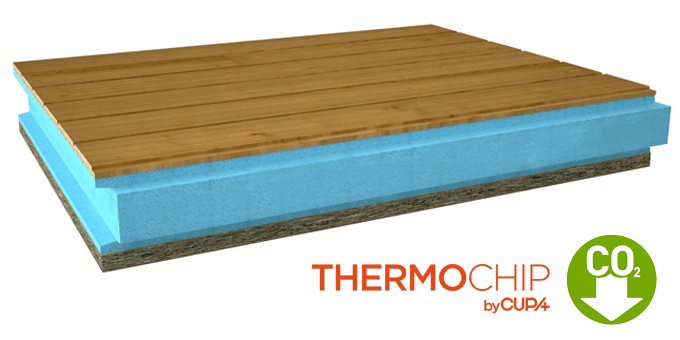
The construction system THERMOCHIP® DECO, consists of a bicapa panel formed by a decorative board and a 3 cm thick extruded polystyrene insulator that can be installed to cover the interior of roofs and walls with hardly any work done.
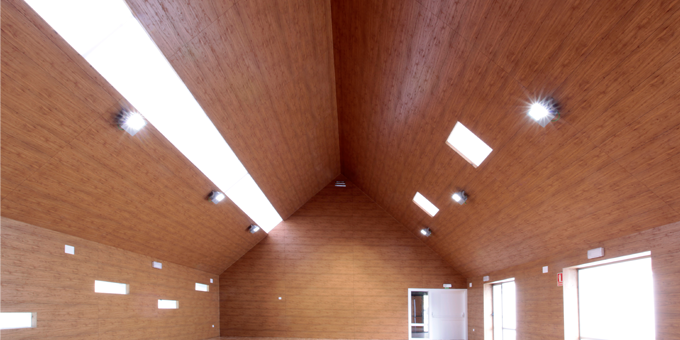
Placed only on deck,THERMOCHIP® DECO achieves a saving of 4.2% in heating demand, reducing COâ‚‚ emissions by a percentage close to 3%. If we choose to install it only on our walls, the savings increase to 8.3% and emissions drop to 5.7%. By combining its installation on the roof and walls, we achieve the highest levels of energy efficiency, saving 22.7% in heating demand and reducing carbon dioxide emissions by 13.4%.
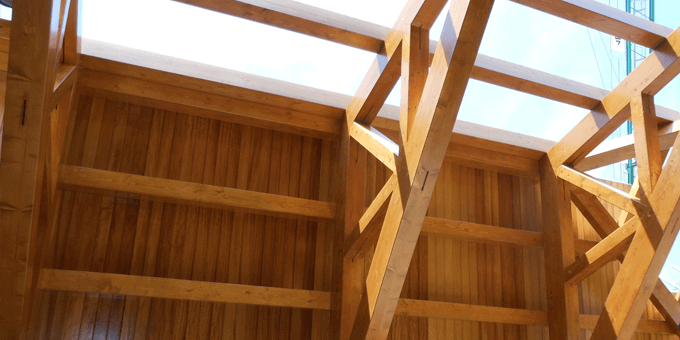
In the medium and long term, given the unstoppable increase in energy costs, our homes will become increasingly more energy and economically efficient. Furthermore, the energy performance is given a very high aesthetic value since ourpanels bicapa wood finishes and our melamines fully adapt to the latest trends indecoration.
Furthermore, this type of rehabilitation work is eligible for aid for energy efficiency called by the IDAE and which we have already reported on inprevious posts of the blog.
Check the complete project by registering in ourSimulator CTE.