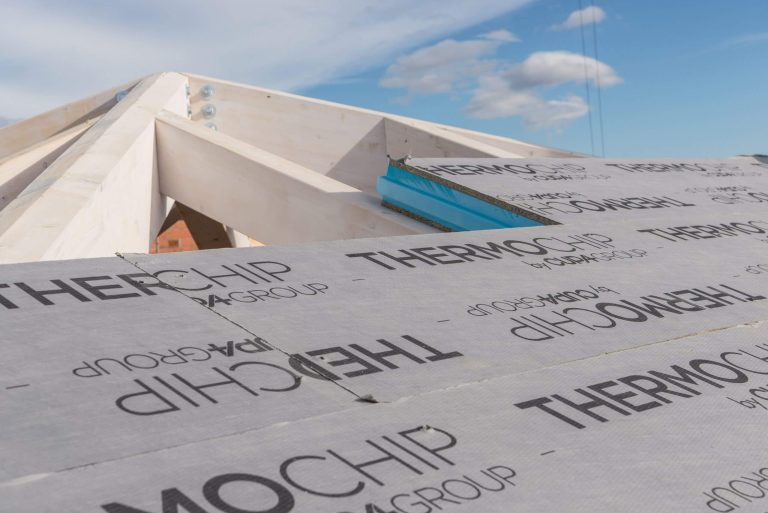
Themultilayer panelsThey have established themselves as the most appropriate construction solution for roofs and floors, both in new construction and in renovations of existing buildings. They offer a balance betweenendurance, isolationanddesign flexibility. However, the choice of these systems goes beyond their aesthetics, requiring in-depth technical analysis to ensure long-term safety and performance. These are the keys that make these panels the best option.
Resistance: Resistance to loads and much more
When we talk about the strength of multilayer panels, we often think only of their ability to withstand static loads. However, it is crucial to consider other factors that are equally determining for the durability and safety of the structure:
- Impact Resistance:A vital aspect, especially in walkable roofs and slabs. We must verify the resistance to bothhard body impacts, likesoft body impacts(fall of people). The panels must be certified to withstand these eventualities without compromising their structural or functional integrity.
- Creep Behavior:Materials, under constant and prolonged loads over time, can experience permanent deformations. It is essential to analyze thecreep behaviorof the panels to ensure that they maintain their geometry and mechanical properties throughout their useful life. A proper study avoids problems with excessive deflection or cracks in the future.
- Walkability:For floors or decks that require regular access or maintenance, the ability to walk over the panel is a critical factor. The panels must be certified to withstand traffic, distributing loads effectively and avoiding surface or structural damage.
- Certification and risks of using non-certified panels:At Thermochip with our DAU certificate issued by ITeC, we have all these tests. Opting for panels that lack adequate certifications in impact resistance, creep or walkability is taking a risk. This can lead to failures, accidents, costly repairs and, ultimately, legal liabilities. Trusting certified products is an investment in safety and durability.
Insulation: Comfort and Energy Efficiency
Insulation is another fundamental pillar of multilayer panels, covering two key aspects:
- Thermal Insulation:The versatility of multilayer panels allows you to design withvarious thicknesses of insulation. This flexibility is a significant advantage, as it allowsadjust the panel to the specific thermal needs of each project, optimizing energy efficiency and interior comfort. Different thermal transmittance values (U) can be achieved depending on the thickness of the insulation, which contributes to meeting the requirements of the Technical Building Code (CTE) and reducing energy consumption.
- Acoustic Insulation:Of vital importance, especially in thelightweight construction, where mass alone is not always sufficient for good insulation. The level of acoustic insulation of a multilayer panel can be configured by selecting the materials and theArrangement of plugins in the final solution, such as additional layers of sound-absorbing materials or high-density sheets. It is crucial to differentiate between:
- Air Noise Isolation:Refers to the panel’s ability to attenuate airborne sound (conversations, music).
- Impact Noise Isolation: Extremely important in horizontal elements such as slabs, refers to the ability to reduce the noise generated by footsteps, impacts or falling objects on the upper floor. Proper design of multi-layer panels, often incorporating resilient layers, is key to effectively mitigating this type of noise, significantly improving the quality of life of occupants.
- Our DAU certificate also incorporates the acoustic performance of both impact noise and airborne noise.
Design: Criteria for Project Optimization
The correct integration of multilayer panels in an architectural project is based on well-defined design and execution criteria:
- Thanks to our DAU certificate (Document of Suitability for Use):issued byITeC (Institute of Construction Technology of Catalonia), we have a specific section dedicated toproject criteriathat establish the guidelines for an adequate design. These criteria cover aspects such aspanel dimensionsand the need forplan the supports so that the panel is optimizedin terms of its structural behavior and use of material. Following these guidelines ensures that the design takes full advantage of the panel’s properties.
- Coherence between Design and Execution:Furthermore, the DAU incorporatesexecution criteria. Guaranteeing coherence between design and execution, something that is vital so that what was projected on paper is correctly transferred to the construction site, avoiding errors, unnecessary work and guaranteeing the expected performance of the system. Collaboration between designers and installers, based on these certified criteria, is the key to success.
In summary, the choice of multilayer panels for roofs and floors goes beyond the mere specification of a material. It involves an exhaustive technical analysis of its resistance to various stresses, its thermal and acoustic insulating capacity, and design and execution planning that aligns with certifications and good practices in the sector. By considering all these aspects, we ensure not only the functionality and durability of our buildings, but also the comfort and safety of their occupants.






 Blog
Blog