What are the changes and deadlines to adapt to the new technical building code?
The Technical Building Code (CTE) is the regulatory framework that establishes the requirements that buildings must meet in relation to the basic safety and habitability requirements established in Law 38/1999 of November 5, on Building Planning (LOE). The basic quality requirements that buildings must meet refer to safety matters (structural safety, fire safety, safety of use) and habitability (health, noise protection and energy savings).
On December 28, 2019, a modification of theTechnical Building Code (CTE)collected in royal decree 732/2019, which includes a review of the document‘DB HE Energy Saving’to adapt it to European standards and norms. The result of this change is a review of the minimum energy efficiency values and the definition of almost zero energy consumption building (ECCN) is updated, which we will mention below, with special emphasis on insulation and enclosures:
CTE DB HE 0 Limitation of energy consumption
According to the new technical building code, energy consumption (refrigeration, DHW, ventilation, heating, and humidity control) is limited according to the winter climatic zone of the home.
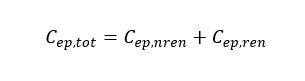
This restriction is implemented through the already existing limit for non-renewable primary energy consumption (Cep,nren), whose value is reduced by approximately half, and the new parameter total primary energy consumption (Cep,tot), sum of renewable plus non-renewable energy consumption, as shown below:
Total primary energy consumption parameter calculation formula
Therefore, stricter primary energy consumption limits apply to a municipality with lower winter severity than to a municipality located in a climate zone with higher winter severity. As an example, Almería, which is located in climatic zone A, has a Cep,nren of 25 kW·h/(m2·year), while Madrid with climatic zone D, its limit is 38 kW·h/(m2·year).
This implies that in order to reduce energy consumption and comply with these primary energy consumption limits, the materials installed in the home must be unbeatable as thermal insulation.
The purpose of this delimitation seeks to achieve a rational use of energy, as well as ensuring that a part of this consumption comes from renewable energy sources. So much so that all buildings, new or existing, that meet the requirements set forth in thisDB HE Energy SavingAs far as the limitation of energy consumption is concerned, for newly constructed buildings they may be called “Almost Zero Energy Consumption Buildings (ECCN)”
CTE DB HE 1 Conditions for controlling energy demand
This document includes a control of energy demand, in accordance with the latest modifications of the new technical building code. For this, buildings must have a thermal envelope that limits primary energy needs to achieve thermal comfort. This affects different areas, and specifically insulation and enclosures, which will be regulated as follows:
Insulations and enclosures
Although this parameter was already contemplated in the previous version of CTE, this modification further limits the thermal transmittance (U) of each component included in the envelope. In addition to this, the concept of global heat transmission coefficient through the thermal envelope (K) of the building is recovered. The relationship between the interior volume of the home and the area of exposure to the outside makes this factor more restrictive in single-family homes, around 60% more severe, while in multi-family homes it increases to a lesser extent, approximately 40%. These factors imply that the insulation must be of excellent quality.
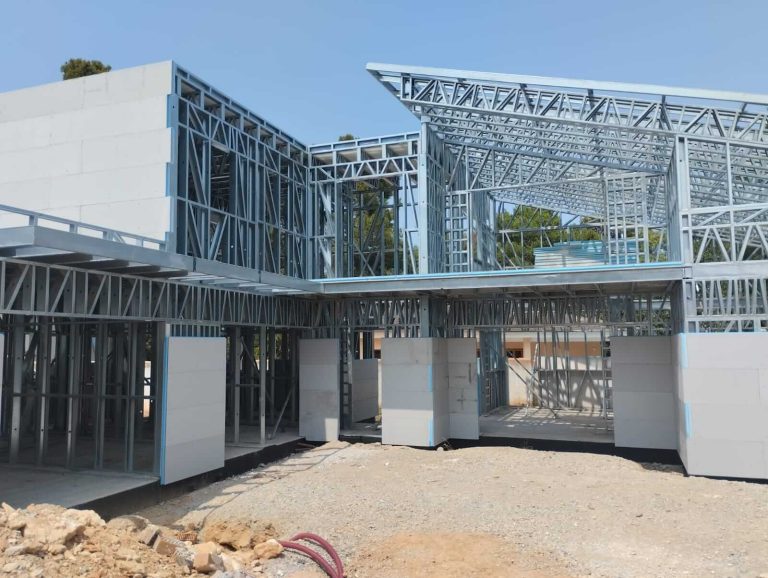
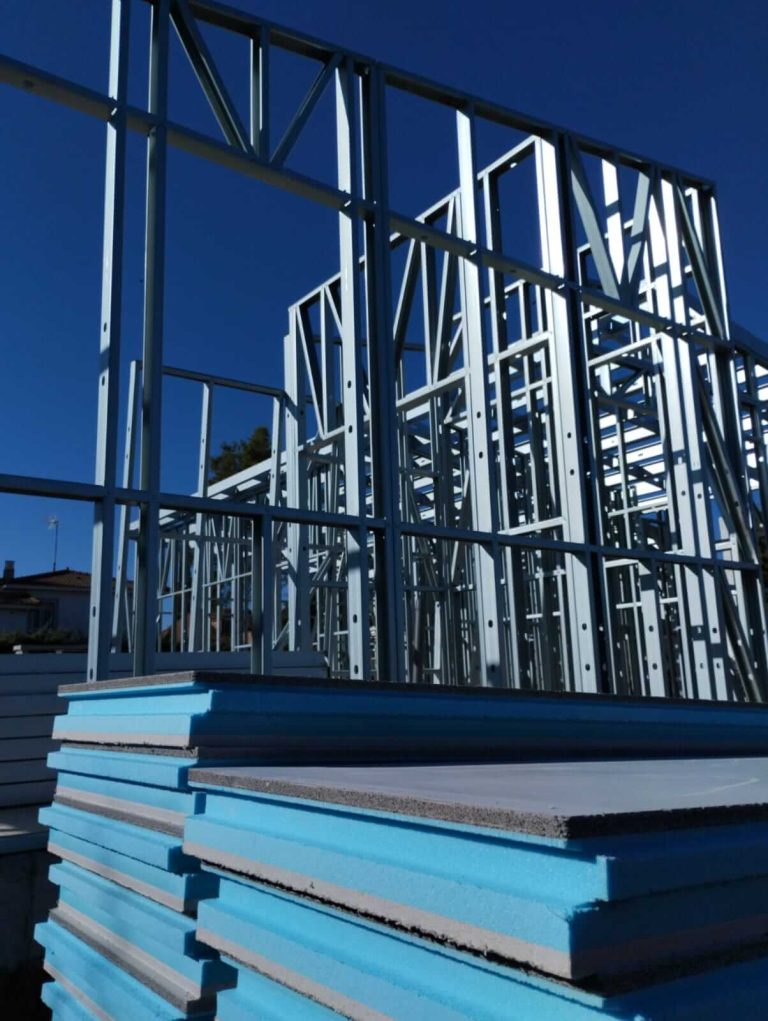
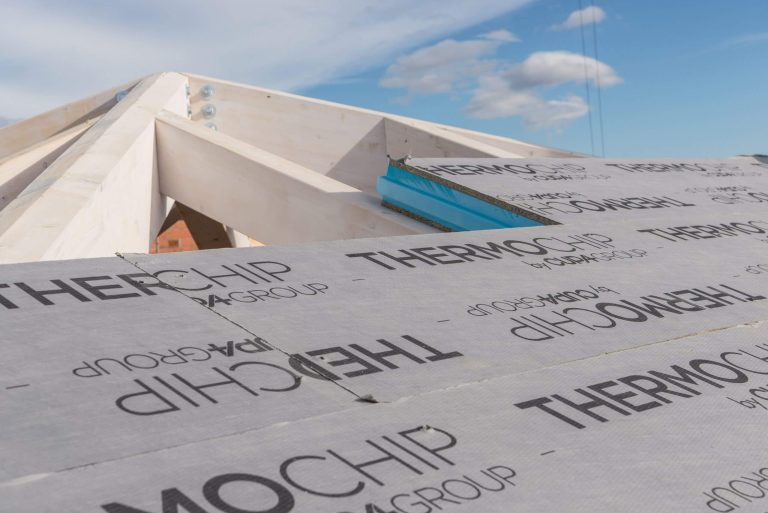
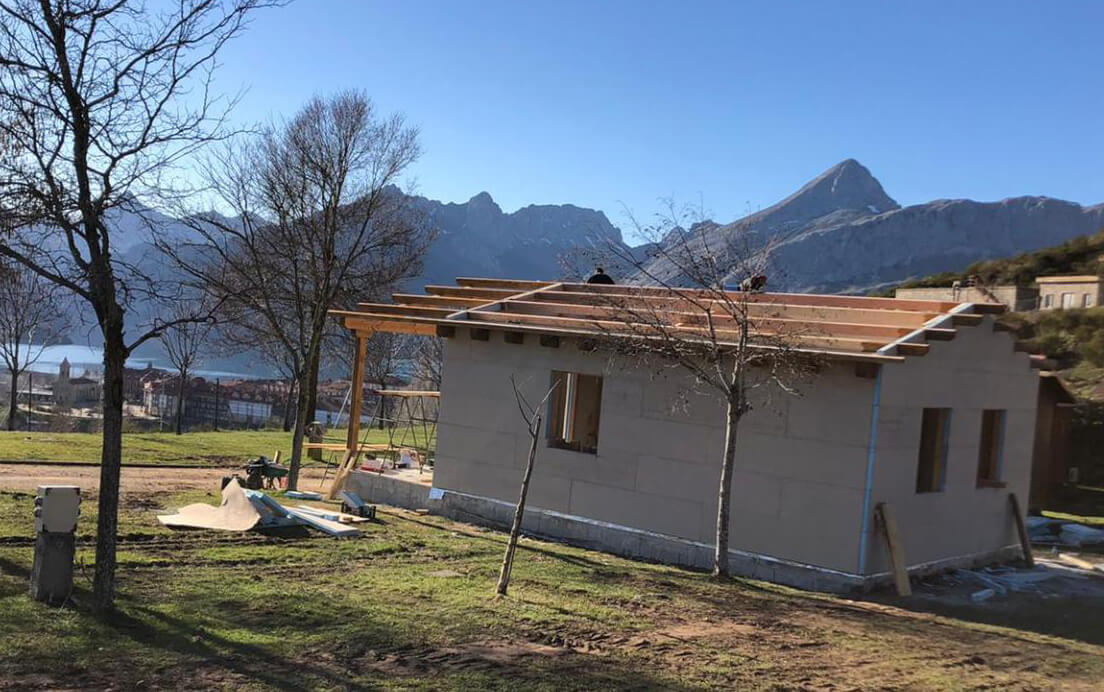
Ourprefabricated panels ThermochipThey offer much superior performance than traditional manufacturing systems, in terms of energy efficiency. This qualitative leap is verifiable in terms of thermal transmittance, where this value in a traditional construction such as conventional brick is equivalent to 0.41 W/m2K, and for a project carried out with Thermochip Housing it is equivalent to 0.17 W/m2K.
Ultimately, thehousing systemsThey are a tool that allows us to meet the demands demanded by the market and the planet today, through a safe, profitable, quick to install and sustainable system. Precisely, sustainability is one of the pillars on which it has been developedThermochip housing, this concept is based, from the raw material, to its manufacturing process and final use, on the principle of energy efficiency. The production process of Thermochip has managed, on the one hand, to reduce the generation of waste and CO2 emissions as much as possible, and on the other, to completely eliminate the use of water.
Application deadlines for the new technical building code:
Voluntary and mandatory application of Royal Decree 732/2019
The 6-month period of voluntary application of Royal Decree 732/2019, whose original end date was June 27, 2020 (before the application of the state of alarm), will end on September 23, 2020, the application of the aforementioned Royal Decree being mandatory for all those works that request a municipal license from the September 24, 2020.
Works for which a license had been obtained between December 28, 2019 and March 14, 2020
Determining the date before which the work must begin or otherwise must be adapted to Royal Decree 732/2019 has some complexity. If you are in this case, the following conditions are established for the deadlines:
Firstly, the time elapsed must be counted from the day following the granting of the license or its notification, if applicable, until March 13, 2020, first calculating the complete months elapsed (until the same day of the corresponding month or, if in the expiration month there is no day equivalent to that on which the calculation begins, until the last day of the month) and then the remaining calendar days.
Secondly, the elapsed period calculated in the previous point must be subtracted from the period established for the beginning of the works (failing 6 months), considering for the calculation of the remaining days that the months have 30 days.
Finally, the remaining time must be counted from June 1, 2020, the day on which the deadlines resume, considering the full months and then the remaining days as days. skillful. Both the non-working days for the entire national territory, as well as the non-working days of the community or autonomous city and the non-working days of the corresponding municipality must be eliminated from this account.
Example of a license obtained between December 28, 2019 and March 14, 2020: -Date of grant or notification of the license: January 8, 2020 -Deadline for the start of works: we will take 6 months as an example.
Time elapsed until March 13: 2 months (from January 9 to March 9) and 4 days (March 10, 11, 12 and 13)
Remaining time: of the initial 6 months, having elapsed 2 months and 4 days, there remain 3 months and 26 days (30 days – 4 days: 26 days).
From June 1, the remaining time is added: 3 full months (from June 1 to September 1) and 26 days skillful. Let us assume an Autonomous Community and a municipality that does not have non-working days on the affected days other than those of the General Administration of the State. The last day of the term is obtained on October 7, 2020. If the works begin from October 8, 2020, the project will have to adapt to Royal Decree 732/2019 modifying the CTE.
Works for which a license had been obtained between March 14, 2020 and June 1, 2020
Those works for which a municipal license had been obtained between March 14, 2020 and June 1, 2020 and whose projects were not adapted to Royal Decree 732/2019, for the purposes of applying this Royal Decree, must begin within the period provided for in the license itself, counted from June 1, or, in the absence of a deadline provision in the granting of the license itself, within a period of six months. from June 1, 2020. Otherwise, they must adapt their projects to the modifications of the new technical building code approved in Royal Decree 732/2019.
The THERMOCHIP technical team is at your disposal:
Thermochip has a technical office that provides support to all its clients in the development of their projects, from the design process to the installation phase, providing training to the professionals involved in the start-up process. If you want to know more information about our prefabricated panel systems, and how they adapt to the new regulations, do not hesitate to contact us.contactwith our team of professionals, without obligation.
Utilizamos cookies propias y de terceros. Puedes aceptar todas, rechazar las opcionales o configurar tus preferencias.
Funcionales
Always active
El almacenamiento o acceso técnico es estrictamente necesario para el propósito legítimo de permitir el uso de un servicio específico explícitamente solicitado por el abonado o usuario, o con el único propósito de llevar a cabo la transmisión de una comunicación a través de una red de comunicaciones electrónicas.
Preferencias
El almacenamiento o acceso técnico es necesario para la finalidad legítima de almacenar preferencias no solicitadas por el abonado o usuario.
Analíticas
El almacenamiento o acceso técnico que es utilizado exclusivamente con fines estadísticos.El almacenamiento o acceso técnico que es utilizado exclusivamente con fines estadísticos anónimos. Sin una requerimiento, el cumplimiento voluntario por parte de su proveedor de servicios de Internet, o los registros adicionales de un tercero, la información almacenada o recuperada sólo para este propósito no se puede utilizar para identificarlo.
Seguimiento
El almacenamiento o acceso técnico es necesario para crear perfiles de usuario para enviar publicidad, o para rastrear al usuario en un sitio web o en varios sitios web con fines de marketing similares.







 Blog
Blog